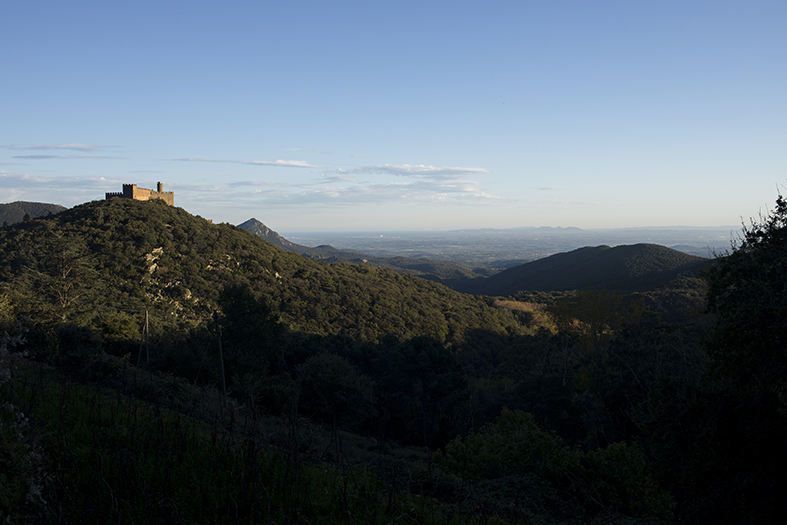
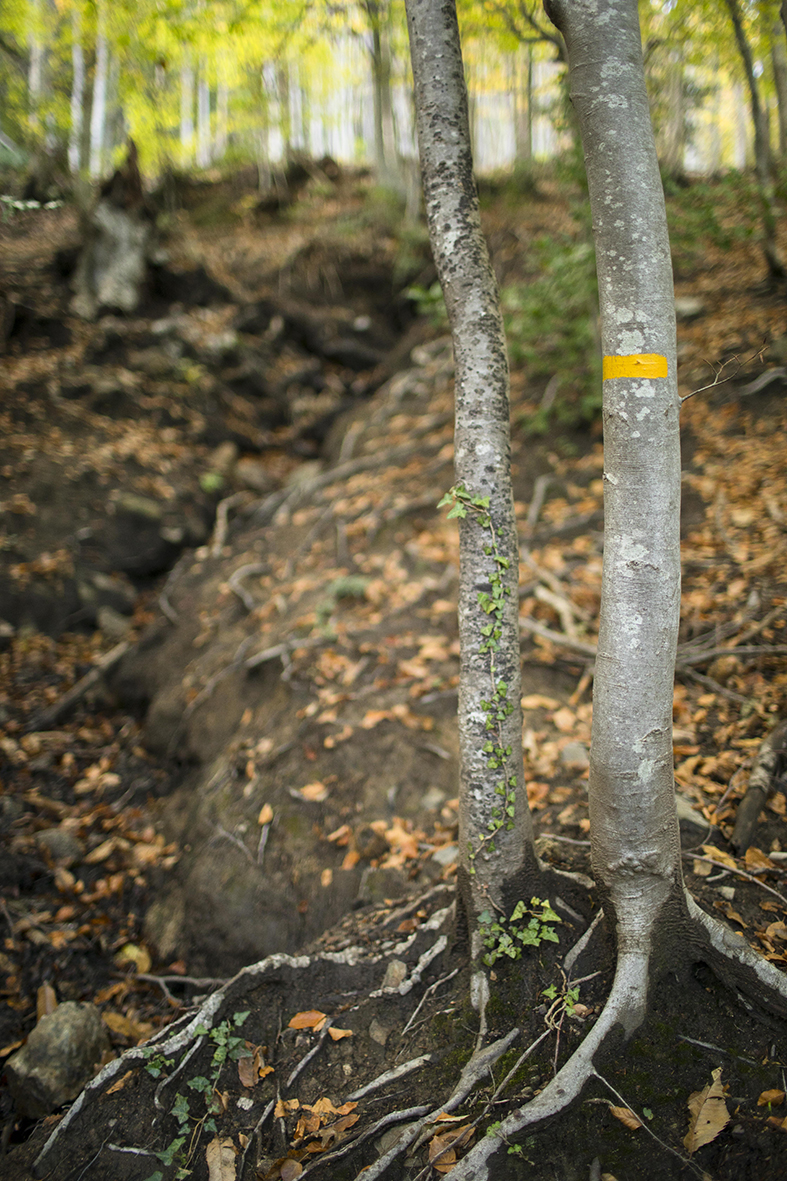
Last year three families arranged to go out for a walk to the Stone Beech Tree, north of Cantallops, in the Albera Natural Park, past Requesens castle. The people from the restaurant La Cantina—the old canteen of the castle and the starting point of our trek—assured us there was no way we could get lost: “After the water tank, take the first turning to the right and then continue straight on.”
We ended up so lost that our phones even reached French reception. While the adults were looking up, searching for a stone on top of a beech tree in the middle of that deep forest, the kids ran around on a carpet of chestnuts. Their shells were spiky like the skin of a hedgehog, but the little ones were so proud of their find that they learned how to shell them.
We never found the beech nor the stone, but we took home a whole bag of king-size chestnuts. The day after we put them to the test with our neighbours: the Requesens chestnuts were unanimously preferred to those from the shop: maybe they were smaller, but they were thicker and definitely tastier.
This autumn, when the chestnut season returned, little Jana grasped, from her four-years-long life trunk of memories, the chestnuts from Albera: we had to go back there, she didn’t want to leave them alone in the forest. Ok, we said, and this time we’ll find the Beech Tree of the Stone! So we organised a second five-family expedition in case we needed some help. Incredible feat No. 1: All of us arrive on time, almost at once, at the parking where the road ends. Incredible feat No. 2: Not one kid has thrown up in the car or has got sick on the way here. Nobody is hungry or tired or wants to sleep.
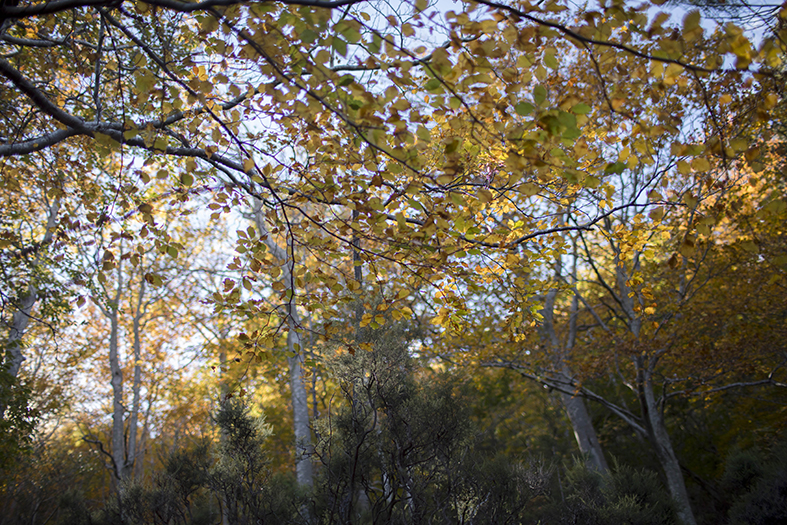
We start walking on a wonderful day. Autumn shines with its warm colours. Our first challenge before the turning: the cows from Albera.
“Are they wild?”
“Not really, but they live on their own here in the mountains. You could say they live in relative freedom.”
“Just like me…”, David thinks.
“They belong to an older breed than the cows we know, the Albera breed. Here they call them ‘beech marten’ because of their colour. It means ‘cow of the colour of the beech tree’.
“Like the Stone Beech Tree!”, says an inspired Jana.
They are harmless, but the stare in their eyes sticking out, their dark fur and sharp horns can look a bit scary. For a brief moment both gangs— the cows and their calves and the humans with their kids—measured our forces. We take the hands of the most perturbed kids—Adrià is worried because he is wearing a red coat—and we follow ten-year-old Alan who shouts:
“There are some yellow prints here, look!” It wasn’t that difficult after all: “first turning to the right and straight on.”
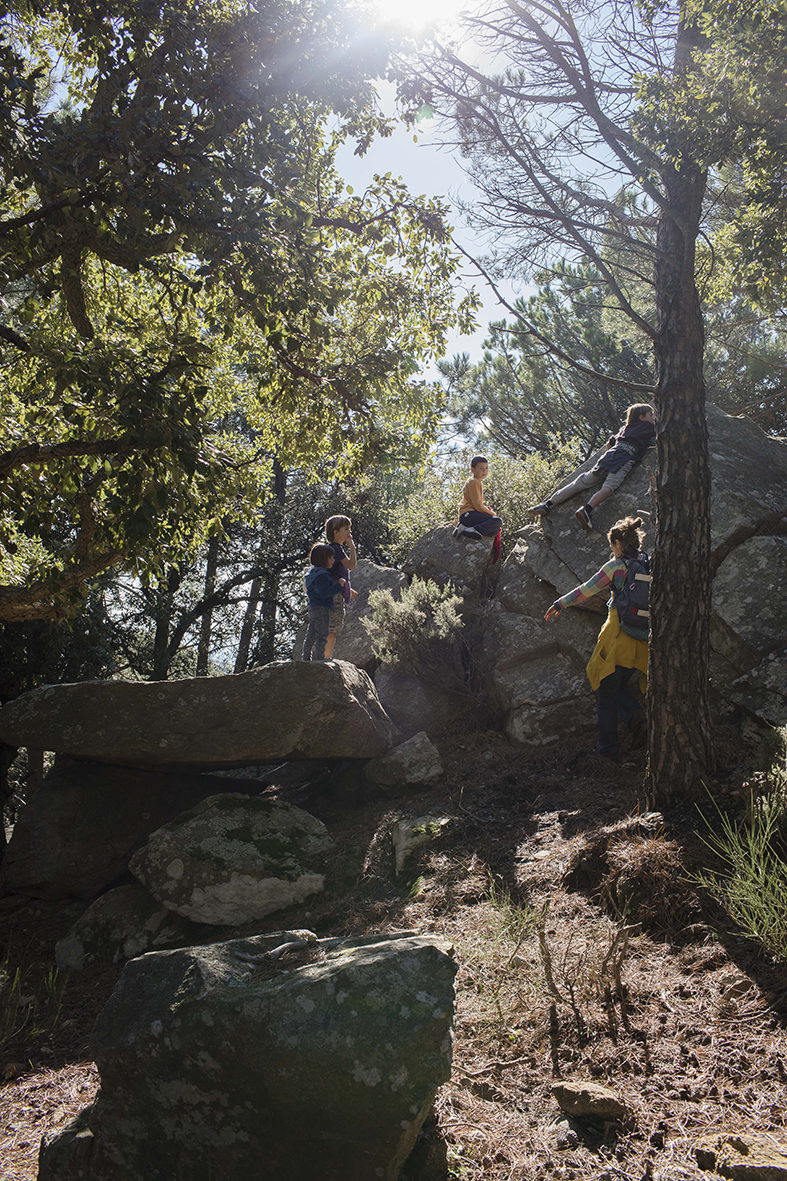
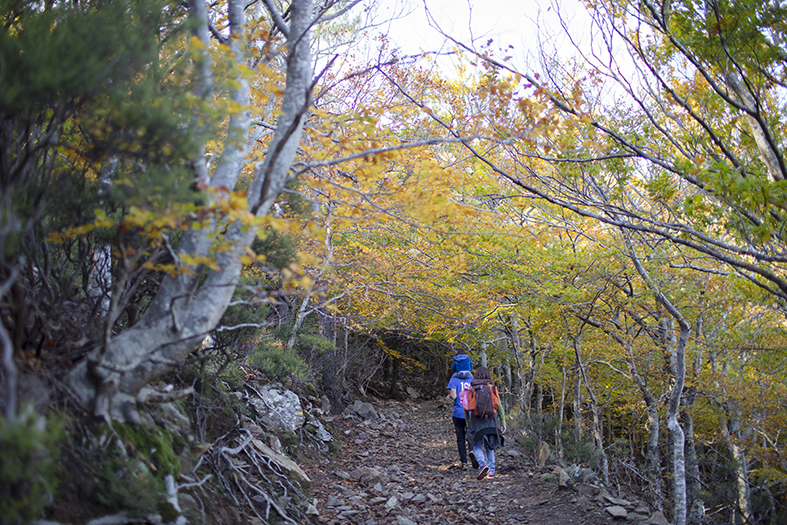
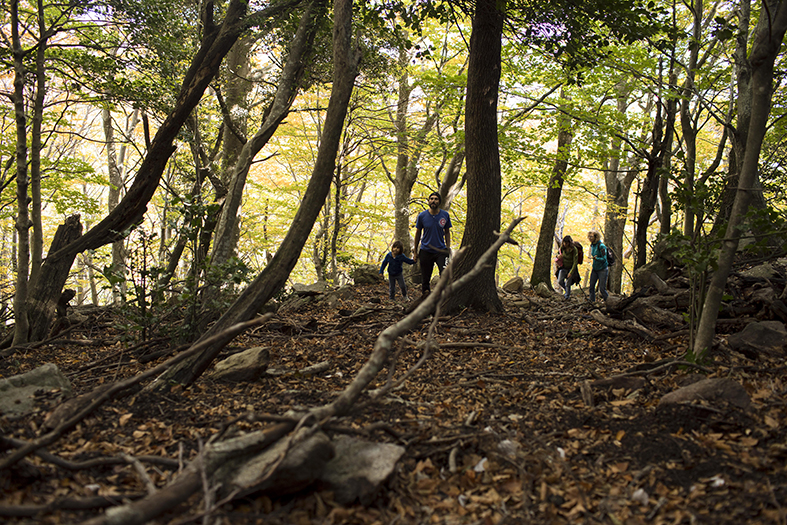
From this point it becomes impossible to walk together as a group. The three older kids run like crazy in and out of the forest, appearing and disappearing from the path, jumping over logs covered by moss and dry leaves. Luke’s dad has carried his one-year-old kid on his back and climbs at a steady pace while mum enjoys taking some pictures. Jana and Jan move to the rhythm of their little legs, holding hands with their parents who help them on the steep climbs. It has rained and the path is full of mud, stones and leaves.
“Can we eat these red balls?”, Alan, Adrià and David ask after finding a holly tree bush.
“Noooooo!”, cries Jan’s dad, terrified.
“Oh, I’ve already had one!”, says Alan looking worried.
“You’ll have to throw up then!”
“I’m kidding”, shouts Alan and the three of them run and jump and laugh in the middle of the woods like three little deer.
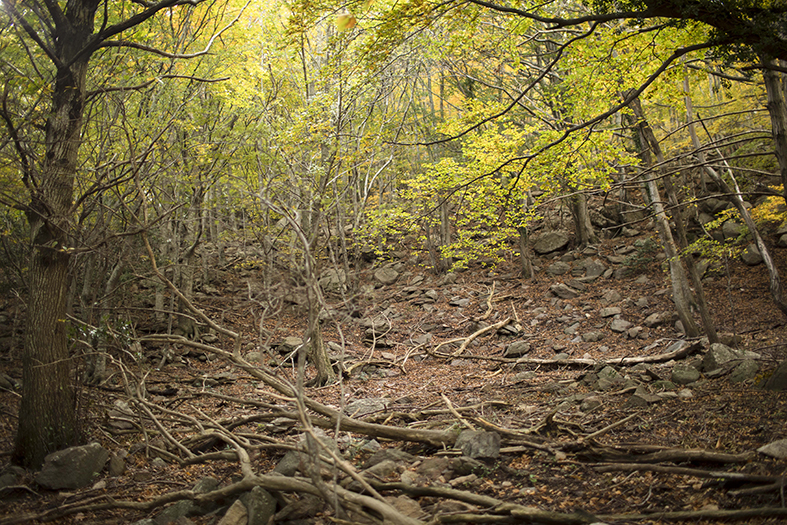
We also find oaks and holm oaks and their sisters the cork oaks, dressed with their cork coats that will save them from the frequent fires in Mediterranean woods. Red pines, white maple trees… Although it is full of chestnut trees, we hardly find any chestnuts this time. Perhaps this year we’ve come too late, or it is maybe the price for taking the right path, who knows. There are only abandoned shells or tiny ones, like the smallest Matryoshka doll. We eat a few wild hazelnuts which are distinctly underwhelming.
“Yuk! They taste really bitter”, says Alan spitting out the nut he has just put in his mouth.
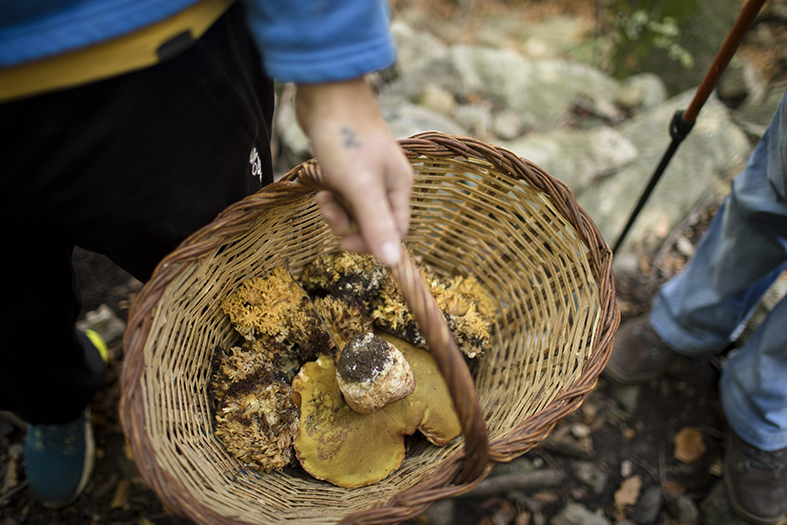
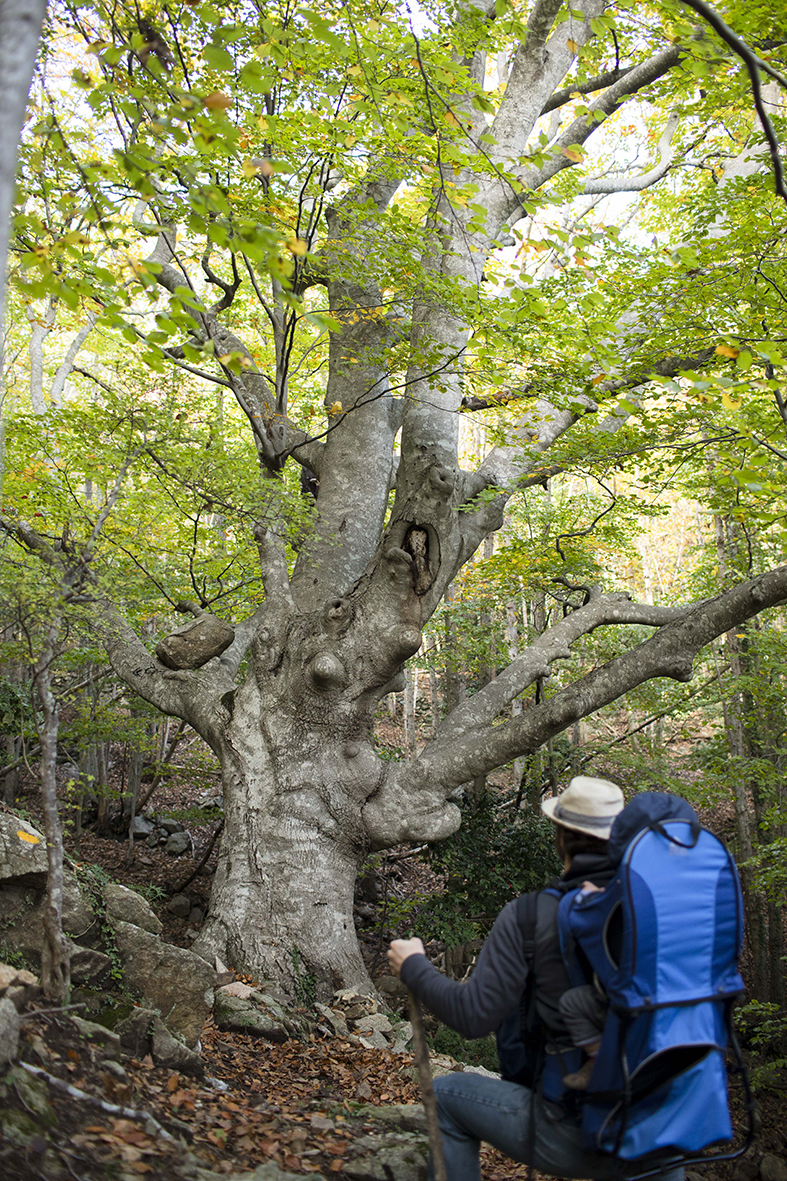
On the way we cross a group carrying a basket with a huge mushroom. After walking for over an hour—most of us with wet feet after crossing a little river—we finally reach the Beech Tree of the Stone! The place is wild, surrounded by wet forest, on a steep slope. Ten times taller and bigger than any other tree around, the Beech Tree appears like an amazing totem. More than three metres high, between its gnarled branches, a big round dark stone dreams its ancient silent sleep.
Sitting on the roots of the centuries old tree, each of us makes up their own theory on how it got up there, on the top of that tree: rolling over a wooden slab placed between the mountain and its branches, after a heavy mudslide or a volcanic eruption, because of aliens or it being the first stone of a castle in the air.
“A giant has put it up there!”, says David, so sure of himself.
We have lunch under the tree with that stone on top, hoping it won’t be today the stone chooses to fall! //